
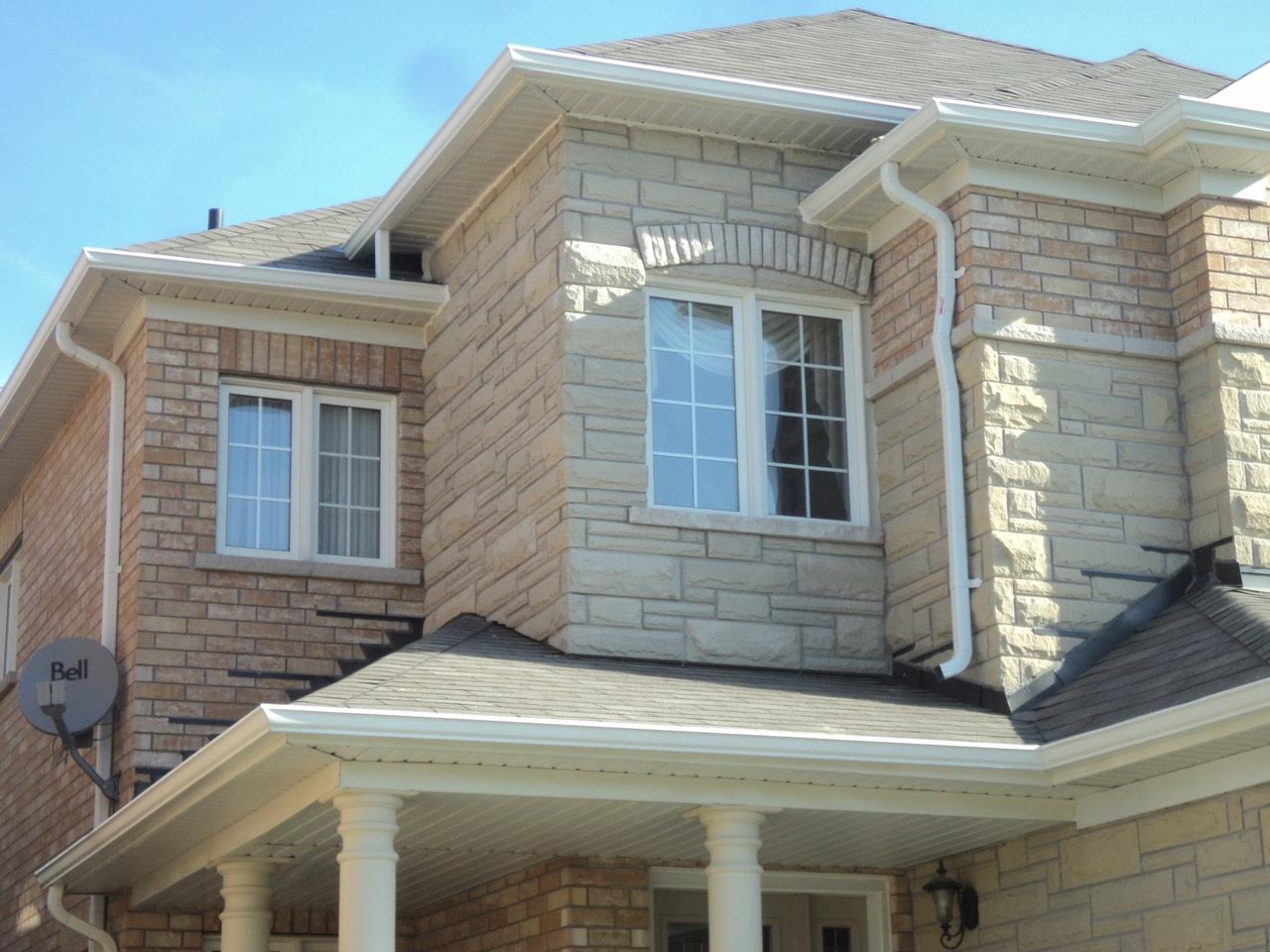
Durham Region’s residential landscape spans a wider range of housing ages and construction types than most parts of the GTA. Oshawa’s older core neighbourhoods contain housing stock from the early twentieth century through the post-war decades, much of it full-brick construction with mortar approaching or past the end of its service life. Whitby and Ajax, by contrast, are dominated by the detached and semi-detached brick veneer homes that went up during the suburban expansion of the 1980s through the 2000s. These two eras produce different masonry problems, and understanding which category a home falls into is the starting point for any useful exterior assessment.
What both eras share is Ontario’s climate. Durham Region sits east of the lake-effect moderation that softens winters in parts of the western GTA, and the freeze-thaw cycling that drives most masonry deterioration in the region is consistent and significant. Homeowners across Oshawa, Whitby, and Ajax are managing the same fundamental forces on their exterior masonry; the difference is in what those forces are working against.
Oshawa’s Older Housing Stock: What Age Means for Brick and Mortar
The older neighbourhoods north and east of downtown Oshawa contain a substantial volume of full-brick homes built between roughly 1910 and 1960. These are structurally different from the brick veneer homes that dominate newer Durham Region development: the brick is load-bearing, the walls are typically two or more wythes thick, and the mortar used in original construction was a lime-based formulation suited to the softer brick of that era.
That mortar, now 60 to 110 years old depending on the specific home, is in varying states of condition. Some of it has been repointed once or twice over the decades and is still performing adequately. A significant portion has never been touched since original installation and is at a stage of erosion where it’s no longer providing the moisture management and structural contribution it was designed for. In either case, a close inspection of joint condition is warranted for any Oshawa home in this age range.
The specific risk in homes of this era is applying modern Portland-heavy mortar to soft historic brick during repointing. The older brick in pre-war and immediate post-war Oshawa construction was fired to a lower density than modern brick, and it requires a mortar that’s softer and more flexible than standard modern mixes. A mason who applies contemporary high-Portland mortar to this brick as a matter of routine, without assessing the brick’s hardness and porosity first, is creating a condition where the mortar is harder than the brick it’s bonding. When thermal movement and freeze-thaw cycling stress the wall, the brick face fails rather than the joint, because the brick has become the weakest link. This results in spalling damage that wouldn’t have occurred with an appropriate mortar.
Homeowners with pre-1960 full-brick homes in Oshawa should specifically ask any mason they’re considering hiring how they assess mortar compatibility with existing brick, and what mix they’d propose for the specific home. A contractor who can answer that question specifically is demonstrating the knowledge the job requires. One who offers a standard repointing price without asking about the age and type of the existing mortar is signalling that mortar selection isn’t part of their process.
Mid-Century Bungalows: A Specific Profile
The post-war bungalow stock that makes up a large portion of Oshawa’s residential neighbourhoods, built roughly between 1945 and 1965, presents a consistent masonry profile. These homes typically have full brick exteriors, relatively low rooflines with modest overhangs, and concrete block or poured concrete foundations with parging applied to the above-grade section.
At 60 to 80 years of age, the masonry on these homes is typically showing one or more of the following conditions: mortar joint erosion across the main wall that’s past the monitoring stage and into the repointing range, parging on the foundation that has delaminated or is missing in sections, and chimney deterioration that ranges from significant mortar erosion to partial structural compromise in homes where the chimney has been neglected for the full life of the building.
The chimneys on these bungalows deserve specific attention. A low-roofline bungalow chimney is relatively accessible compared to a two-storey home’s stack, which is one reason chimney work on these homes is often deferred: it doesn’t look alarmingly tall or dangerous from the ground. But the mortar in a chimney that hasn’t been tuckpointed since original construction in 1952 is in the same condition as the mortar in a chimney on a two-storey home from the same era, which is to say it almost certainly needs significant work.
Whitby and Ajax: Brick Veneer from the Boom Years
Whitby and Ajax grew dramatically during the 1980s and 1990s as Toronto’s commuter belt expanded eastward along the 401 corridor. The homes built during this period are predominantly brick veneer over wood frame, with the veneer ranging in quality from solid, well-installed work to installations that were completed under the cost and time pressure of high-volume tract construction.
These homes are now 25 to 40 years old, which puts them squarely in the range where the maintenance decisions made or deferred over that period are becoming consequential. The mortar in a Whitby subdivision home built in 1988 is now 37 years old. In many cases it has never been assessed or maintained. Whether that’s a problem depends on the original installation quality, the exposure conditions of the specific elevations, and what’s happened to the drainage and grade around the foundation over the years.
The most common masonry issues presenting in this housing stock across Whitby and Ajax follow the same pattern seen in other boom-era GTA suburbs:
- Mortar joint erosion approaching or past the repointing threshold, particularly on north and west-facing elevations and around window and door openings where joints are thinner and more vulnerable
- Weep holes at the base of the veneer that are blocked by mortar droppings from original construction, paint applied during maintenance, or soil and mulch that has accumulated against the foundation over decades of landscaping changes
- Edge restraint migration on interlock driveways and walkways installed at the same time as the home, now showing the gap-opening that indicates the restraints have been moving outward for years
- Efflorescence concentrated at grade level and above garage door openings, indicating that the drainage cavity behind the veneer is carrying more moisture than the weep holes are managing
Foundation Conditions Across Durham Region
Durham Region’s soil conditions vary across the area but include significant clay content in many of the residential zones that developed during the boom years. Clay-heavy soil retains water after rain rather than draining it quickly, which means the soil adjacent to a foundation stays saturated for extended periods after heavy rain or spring snowmelt. That sustained moisture against the foundation wall creates hydrostatic pressure that works against both parging and below-grade waterproofing systems.
The practical consequence for homeowners is that foundation parging in clay-soil areas tends to deteriorate more quickly than it would in better-draining conditions, and the cycle of parging failure and replacement happens on a shorter timeline. Polymer-modified parging mixes, which bond more durably to the substrate and resist moisture cycling better than standard cement-lime mixes, are a worthwhile upgrade in these conditions even though they cost more per application.
Grade management around the foundation is also more consequential in clay soil areas. Soil that has settled against the foundation over the years, raising the grade toward the house, or landscaping that was installed without adequate drainage provisions, can turn a manageable moisture situation into a chronic one. Correcting the grade, ensuring downspout discharge is directed away from the foundation, and maintaining adequate clearance between soil level and the bottom of brick or siding above the parging all contribute meaningfully to how long a parging application holds.
The Interlock Situation in Whitby and Ajax Subdivisions
Many of the homes in Whitby and Ajax’s 1990s and 2000s subdivisions had interlock driveways and front walkways installed either by the builder or by early owners looking to upgrade from poured concrete. These installations are now 20 to 30 years old, and the base systems beneath them have been through two to three decades of Ontario freeze-thaw cycling.
The most consistent problem in this age range of interlock is edge restraint failure combined with joint sand depletion. The plastic edge restraints used in installations from this era were often under-pinned, and the original joint sand was standard kiln-dried material rather than polymeric sand, which washes out more readily. The result in many driveways is a surface that’s spreading at the edges, has visible gaps in the outer courses, and has developed rocking or settled sections in the interior where the base has compacted unevenly.
Sectional repair is appropriate for localized problems where the base is otherwise stable. Full resetting is warranted when edge migration is widespread, when the base has settled significantly in multiple areas, or when the original installation had base depth inadequate for the load it’s been carrying. Getting an honest assessment of which situation applies is the most useful thing a contractor can offer before any repair work begins.
Timing Masonry Work in Durham Region
The repair season for masonry work in Durham Region is the same as across the GTA: late April through mid-October for mortar-dependent work, with the practical booking reality that the better contractors fill their spring schedules quickly once the season opens. Durham Region homeowners sometimes find that the contractor options available to them are more limited than those available to homeowners closer to Toronto, simply because fewer established masonry contractors operate primarily in this area rather than treating it as a secondary market.
Getting assessments done in March and April and booking work for May or June puts homeowners ahead of the seasonal backlog and gives new mortar the full warm season to cure before the next winter. For homeowners dealing with chimney work specifically, the spring window is also the right time to confirm whether the chimney is safe for use before the following heating season begins, rather than discovering a problem in October when contractor schedules are already committed.
For Oshawa brick repair work specifically, the combination of older full-brick homes requiring mortar compatibility expertise and newer veneer homes requiring drainage and tie assessment means that finding a contractor with genuine breadth of experience across both construction types is worth doing rather than defaulting to whichever company returns a call first.
What a Useful Exterior Assessment Covers for a Durham Region Home
An assessment that produces useful information for a Durham Region homeowner should cover the following without being prompted to do so by the homeowner: the full perimeter of the exterior wall at close range, including tapping mortar joints in multiple areas to assess adhesion rather than relying on visual inspection alone; the chimney from base to crown, including cap condition, crown integrity, flashing at the roofline, and mortar joint condition in the above-roof section; the foundation parging condition and grade relationship at the base of the wall; weep hole condition at the base of any brick veneer installation; and any visible drainage concerns that could be contributing to moisture problems at the foundation or within the wall assembly.
A useful assessment also distinguishes between what needs attention now and what can be monitored. Not every masonry issue requires immediate repair, and a contractor who treats every observed problem as equally urgent isn’t helping the homeowner prioritize. The goal of a good assessment is a clear priority sequence with a rationale for each item, not a comprehensive list that creates the impression that everything needs to be done immediately. Brick restoration work sequenced intelligently around a homeowner’s budget and timeline is more sustainable than a single overwhelming quote that leads to decision paralysis.
For homeowners managing multiple issues across a Durham Region property, the moisture entry points take priority: chimney flashing failures, open mortar joints at window lintels, delaminated parging at the foundation, and blocked weep holes in veneer construction all allow water into the structure and should be addressed ahead of cosmetic or lower-risk maintenance items. A masonry contractor with experience across both older full-brick and newer veneer construction can help build that priority sequence from a single comprehensive assessment rather than requiring separate visits for each issue.
FAQHow do I know if my Oshawa home has full brick or brick veneer construction?
The most reliable indicator is wall thickness at window and door openings. Full brick construction produces walls that are typically 250mm or more thick at these points, and the deep reveals this creates are visible when windows or doors are open. Brick veneer over wood frame produces thinner walls, typically 150 to 200mm, with shallower reveals. Homes built before roughly 1950 in Oshawa are more likely to be full brick. Homes built after 1970 are increasingly likely to be veneer construction. The distinction matters for repair because mortar selection, drainage cavity management, and the significance of tie condition are all veneer-specific considerations that don’t apply to full brick.
Is it worth repointing a home I’m planning to sell in the next few years?
It depends on the condition of the mortar and how visible the deterioration is. Significant mortar failure is the kind of deficiency a home inspector will document and buyers will use as a negotiating point. The cost adjustment buyers request after an inspection typically exceeds the actual repair cost. Addressing clear, visible mortar deterioration before listing usually produces a better financial outcome than leaving it and accepting whatever discount a buyer’s inspector recommends. Minor weathering that isn’t structurally significant is a different calculation and may not warrant the investment before a near-term sale.
Can I get a masonry assessment done in winter in Durham Region?
Visual assessments can be done at any time of year, and some masonry contractors will walk a property in winter to document what’s visible. The limitation is that snow and ice can obscure conditions that would be visible in warmer months, and any repair work identified will need to wait for temperatures above 5°C before proceeding. A winter assessment is useful for understanding what’s there and beginning the conversation with a contractor, but it shouldn’t be treated as a complete picture of the exterior condition. A follow-up look after snowmelt in spring often reveals additional detail.
Are there masonry problems specific to homes near Lake Ontario in Ajax and Whitby?
Proximity to the lake introduces higher moisture exposure and salt-laden air in some coastal areas, both of which can accelerate masonry deterioration relative to more inland locations. Salt deposits from lake spray can contribute to efflorescence and mortar erosion in homes very close to the waterfront. For most Ajax and Whitby homes that aren’t immediately adjacent to the lake, the soil moisture and freeze-thaw conditions common across the region are more significant drivers of masonry deterioration than lake proximity specifically.