
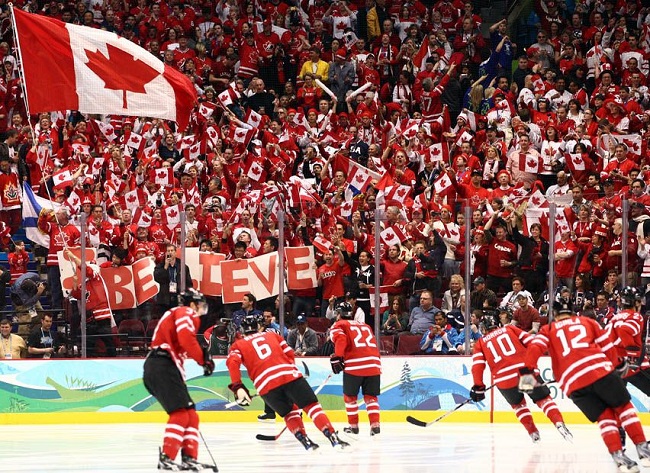
Ask anyone outside the country to name a Canadian sport and you will hear one answer. Hockey is the reflex, and it is not wrong, but it is only the opening chapter. Canada’s sporting life runs across a surprising range of leagues and seasons, from packed NHL arenas to a fast-rising soccer scene, and the way fans follow all of it has changed more in the past few years than in the previous few decades. Here is a guide to the sports the country actually lives for, and how engagement with them is evolving.
Hockey, the national game
Hockey is written into the calendar. The National Hockey League fields seven Canadian teams, in Toronto, Montreal, Ottawa, Winnipeg, Calgary, Edmonton and Vancouver, each carrying its own civic identity and its own decades of hope and heartbreak. The sport is the country’s official winter pastime, and its reach starts long before the professional level, on frozen ponds, in community rinks and in minor leagues that double as a rite of passage. The long wait for a Canadian team to lift the Stanley Cup has sharpened the national attachment rather than dulled it. When a Canadian club goes deep in the playoffs, the audience is not only that team’s fans; it is the whole country adopting a temporary favourite.
Gridiron, hardwood, and the diamond
Beyond the rink, three other leagues command serious followings. The Canadian Football League, with its nine teams and the century-old Grey Cup, plays a distinctly Canadian version of the gridiron game, wider field and all, and remains a late-summer and autumn fixture. Basketball’s profile changed for good when the Toronto Raptors won the NBA title in 2019, turning a single franchise into a national team for a summer and leaving behind a far larger, younger fan base. In baseball, the Toronto Blue Jays carry the same burden and privilege as the only Major League team in the country, Canada’s team by default, capable of pulling viewers from coast to coast during a playoff run.
Soccer’s surge
The fastest change is happening on the pitch. Soccer has quietly become the largest participatory sport in the country, and the professional structure has finally caught up. Canadian clubs compete in Major League Soccer in Toronto, Vancouver and Montreal, while the homegrown Canadian Premier League, launched in 2019, has given smaller cities professional teams of their own. The accelerant is the 2026 FIFA World Cup, co-hosted by Canada, with matches in Toronto and Vancouver and the men’s national team playing on home soil for the first time. A sport that once lived on the margins of the Canadian conversation is moving toward its centre.
Curling, and the rest
No survey of Canadian sport is complete without curling, which pairs a large recreational base with reliably strong television ratings during major championships, a combination few sports manage. Lacrosse holds a quieter but official place as the national summer sport, a nod to the game’s deep roots in the country. Add the winter-sports tradition that runs through every Olympic cycle, and the picture is of a nation whose sporting identity is broader than the hockey shorthand suggests.
How Canadians follow, and wager on, their teams
How fans consume all of this has shifted sharply. Streaming has fragmented the old broadcast model, second screens travel everywhere, and since August 2021, when federal law legalized single-event sports betting, wagering has become a visible part of the mainstream fan experience rather than a grey-area activity. Ontario opened a regulated online market in 2022, and the scale has grown quickly; in 2025, players in the province wagered roughly 12 billion Canadian dollars on sports alone through licensed sites.
That growth has produced a crowded marketplace, which is why neutral comparison guides have become useful. Readers looking for an overview of the Best sports betting sites in Canada can weigh licensing, pricing and features in one place, while those drawn to sharper odds often gravitate to established names such as the pinnacle sportsbook, long known for a low-margin, high-limit approach. Whichever route a fan takes, the basics of responsible play apply: legal gambling in Canada is restricted to adults, with a minimum age of 19 in most provinces and 18 in Alberta, Manitoba and Quebec, and free, confidential help is available through provincial responsible gambling lines for anyone whose betting stops feeling like entertainment.
A country that plays year-round
The throughline is variety. Hockey remains the heartbeat, but Canada is also a basketball country, a baseball country, a curling country and, increasingly, a soccer country, with a sports calendar that rarely goes quiet. The 2026 World Cup will hand soccer its biggest stage yet, and the next generation of fans is arriving with new teams to love and new ways to follow them. The hockey shorthand will survive, as it should, but it has plenty of company.